excl VAT
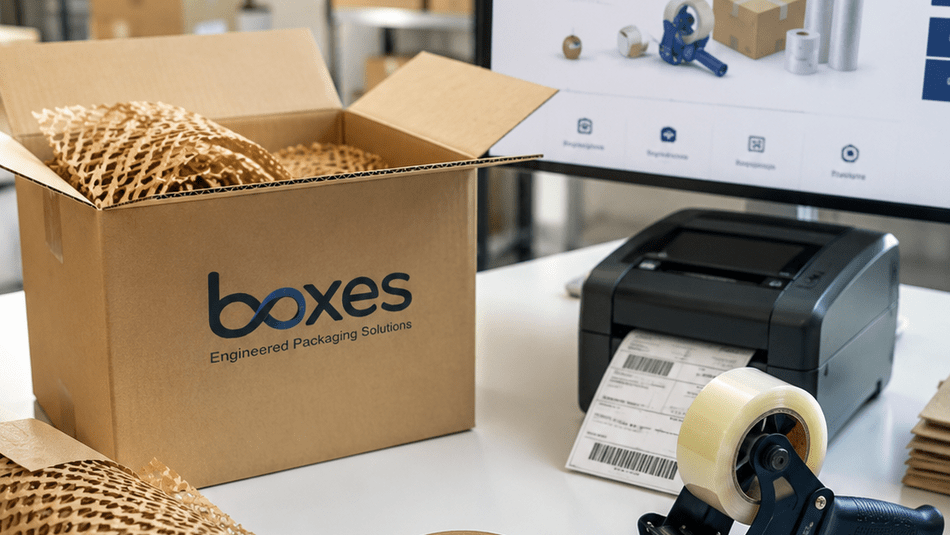
In e-commerce, every euro matters. Many businesses focus heavily on marketing, product pricing, and logistics, while overlooking one area that can significantly impact profitability: packaging.
Packaging costs include much more than boxes and tape. Labor, warehouse space, shipping expenses, and product returns caused by damaged shipments all contribute to the total cost. By optimizing packaging processes, businesses can often reduce overall packaging expenses by 10–30% while improving customer satisfaction.
Many online retailers only consider packaging materials when calculating costs. However, the true cost per shipment typically includes:
In many cases, inefficient processes cost more than the packaging materials themselves.
One of the most common mistakes is maintaining too many box sizes.
When a warehouse stocks 15–20 different box types:
For most e-commerce businesses, 4–6 standardized box sizes are sufficient to cover the majority of orders.
Standardization simplifies warehouse management, reduces inventory levels, and speeds up employee training.
Oversized boxes create unnecessary expenses.
Larger boxes often require:
Many courier companies calculate shipping fees using dimensional weight, meaning lightweight products can become expensive to ship when packed inefficiently.
Many businesses continue using the same packaging materials for years without evaluating performance.
Consider the following:
Higher-quality materials often reduce overall consumption and improve packaging efficiency.
Labor costs frequently exceed material costs.
If an employee spends:
Efficiency improvements may include:
As order volumes grow, manual packing becomes increasingly inefficient.
The highest return on investment often comes from:
Even modest automation can reduce labor requirements by 20–50%.
Overpacking is a common and costly issue.
Typical examples include:
The goal is not to use more packaging materials, but to use the right amount to protect the product during transport.
Many businesses select the cheapest box or tape available, assuming this will reduce costs.
Instead, evaluate:
Only a complete analysis reveals the true cost per shipment.
Packaging automation becomes increasingly valuable when:
In many cases, packaging equipment investments pay for themselves within 12–24 months.
Reducing packaging costs is not about purchasing the cheapest materials available. The greatest savings usually come from improving processes, standardizing packaging, reducing labor time, and selecting the right packaging solutions.
Successful e-commerce businesses evaluate the entire packaging process—from box selection to final delivery. A well-designed packaging operation reduces costs, improves efficiency, and creates a better customer experience.
8BOXES – Engineered Packing Solutions
Professional packaging materials and equipment for e-commerce, logistics, warehousing, and manufacturing businesses.

 Fast Delivery!
 Everything from one source
 Verified quality!
You must login or register in order to make comment!